![IncQuery logo 2022 (horizontal)-1.png]](https://www.incquery.com/hs-fs/hubfs/IncQuery%20logo%202022%20(horizontal)-1.png?height=39&name=IncQuery%20logo%202022%20(horizontal)-1.png)
Creating a good screening section is a difficult task when you consider all that needs to be accomplished in a short span of questions.
Respondent profile(s) - Before we get to authoring the questions, we first must understand the target audience. It is important to develop a respondent profile that defines your target audience. This might be based on any combination of characteristics such as age, occupation, shopping history, decision-making authority, etc. The Screening section is going to weed out people that do not fit into the respondent profile(s).
Assumptions for the incoming sample:
- For B2C: We can assume that the panels have recorded ONLY basic demographics information for the respondents (age, gender, region etc.) – the panels, in most cases, will not record further information for compliance purposes.
- For B2B: We can assume that the panels have recorded basic demographics as well as high-level information about the professional role of the respondents – the panels, in most cases, will not record further information
Designing questions and options - We should avoid asking Yes/No questions, instead, we should ask multiple-choice questions. For example:
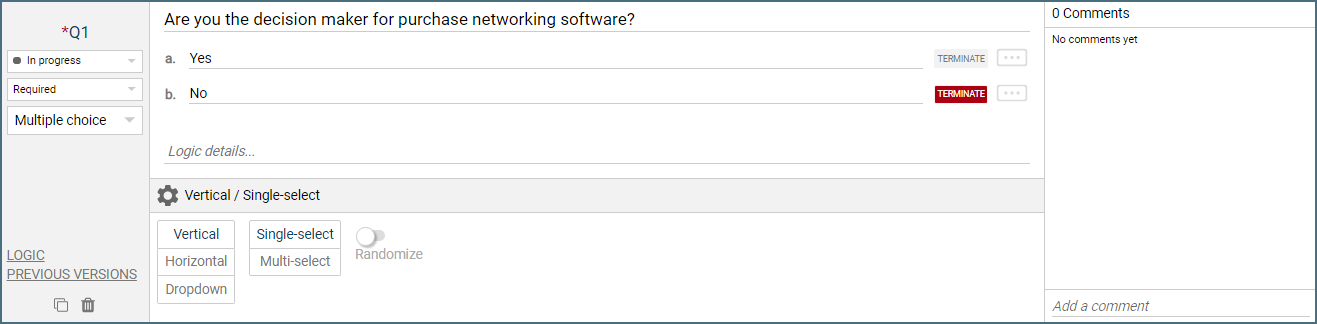 |
Instead of a simple Yes/No question like above, we should ask this:
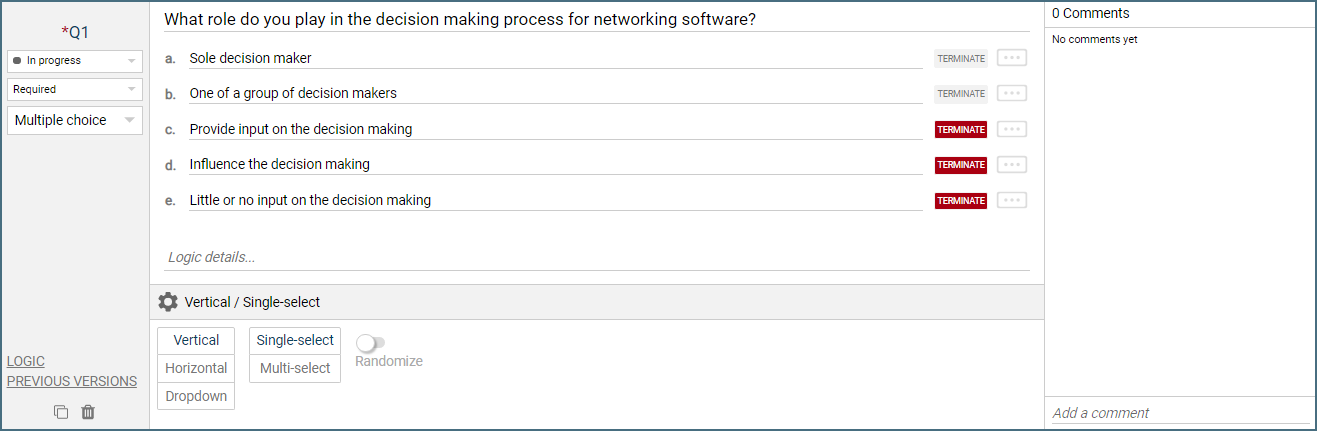 |
This question provides better screening and more information
Cheaters/Quality checks some portion of the respondents taking the survey are gaming the system by providing false information in order to pass the screening for any monetary awards. We will need to develop quality checks to help identify these cheaters so they can be removed from the data set.
Representative fielding - The next item to consider is “will this survey field representatively” meaning does the "incoming sample" need to be balanced to match the demographics of the region we are fielding in. This is typically seen in B2C surveys to capture the opinions of the population more accurately. A representative fielding will require demographics questions in the Screening section.
Typical demographics questions for the US population:
|
|
|
|
|
|
15 question rule - the screening section cannot be too long. A good rule of thumb here is 15 questions, the requirements vary depending on the panel vendor(s) fielding the survey but generally speaking terminations after 15 questions are frowned upon or may require late termination fees for those respondents.
Quotas - When developing your survey, it’s important to understand the quotas you may want to implement. Panels will treat these quotas as terminations, so the same rule applies (question(s) driving the quota should be placed in the first 15 questions). When possible ask awareness/usage questions within the first 15 questions.
Exit path - The researcher will sometimes identify a respondent profile that they are interested in understanding but less interested than the target respondent profile. For example, the researcher looking to assess the penetration of a product/service/brand in the market may consider part of the respondents deemed non-qualifying by previous questions as interesting. The researcher may redirect these respondents to an exit path, which is used to collect answers to a few more questions seen only by the "exit path" lot. The panels will usually charge a lower fee for these short responses, but it is always suggested to create transparency and negotiate the cost per complete with the respective panel company.